Nexus247
Translating the trust of India's largest mall network into a digital shopping experience.
Nexus247 is the omnichannel product of India's largest mall network. Users could shop from real mall stores and get delivery in under 2 hours. The problem was that almost nobody trusted it enough to pay upfront. We mapped 5 end-to-end journeys and 20+ flows, then redesigned the experience from onboarding to returns to fix that.
Nexus Malls is India's largest mall network. Nexus247 is their omnichannel play: a digital product that lets users shop from actual mall stores and get delivery within 2 hours.
The brief sounds simple. The problem wasn't. Malls are trusted because they're physical, curated, familiar. E-commerce is convenient but anonymous. Nexus247 had to be both, without feeling like either.
Every decision in this project was made against one benchmark: does this make the product easier to trust, faster to use, and worth building on.
Trust doesn't translate digitally.
User problem: Mall shoppers trust physical retail. That trust evaporates online. Unclear delivery promises, uncertain authenticity, and cluttered interfaces made users hesitate and default to COD as a safety net.
Business problem: A 99% COD rate was the smoking gun. Users weren't confident enough to pay upfront. That's not a payment issue. That's a design issue.
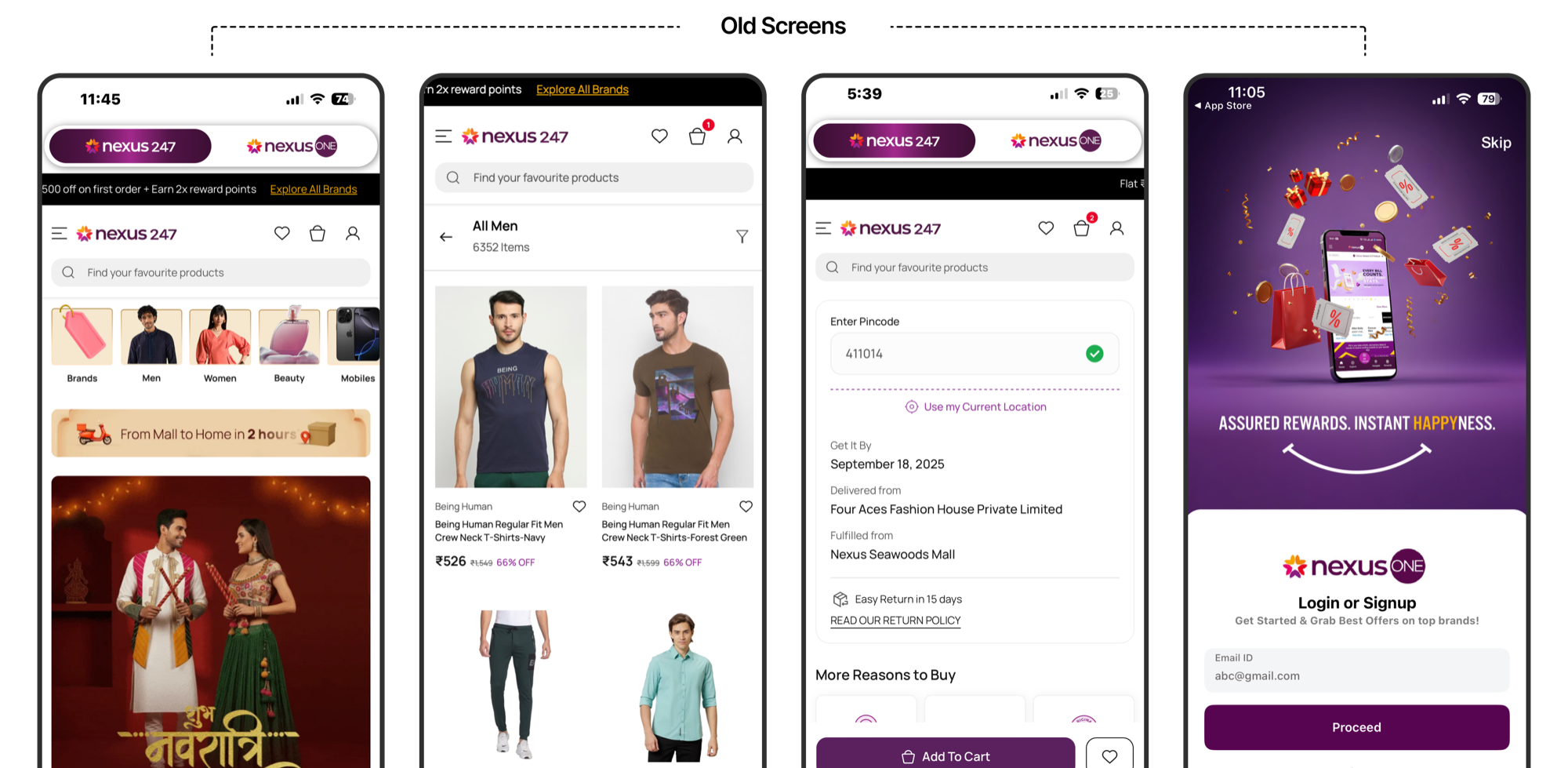
No formal usability lab. Instead: stakeholder interviews with the PM and client team, competitive mapping of e-commerce and mall apps, analysis of the existing app's failure points, and data from Nexus One's existing user base.
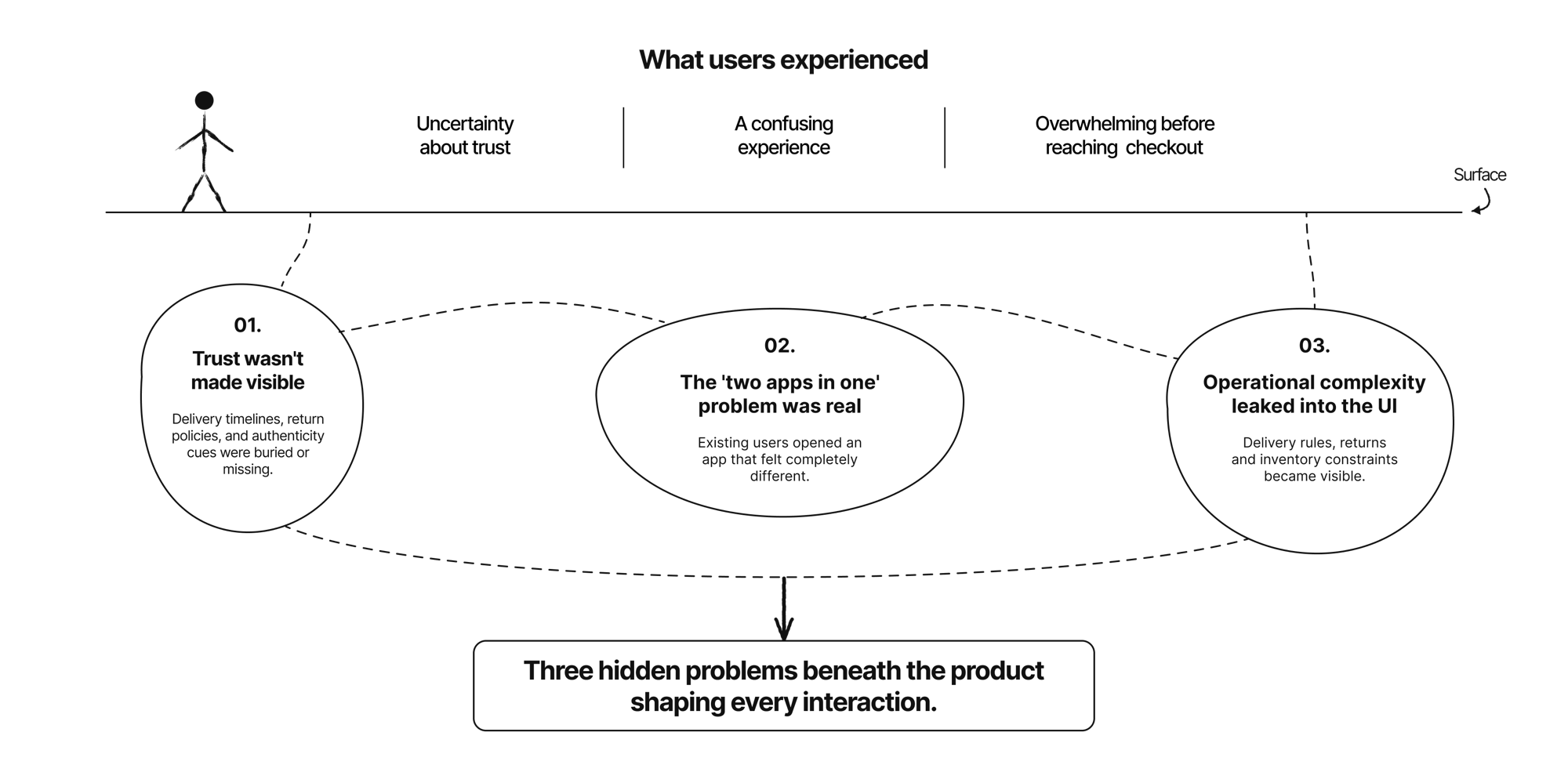
How we got from
problem to product.
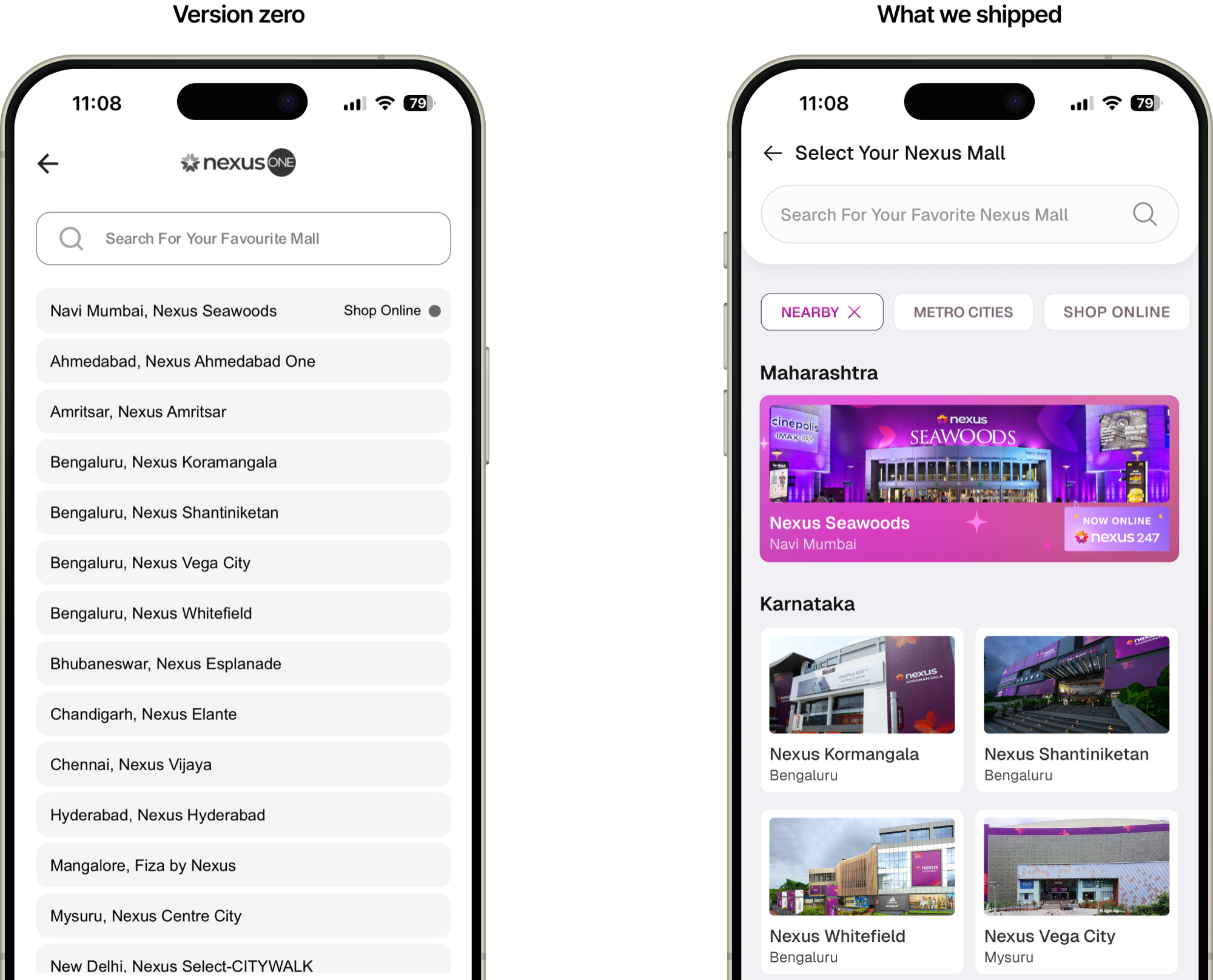
Mall-First Entry
We designed the mall selection screen as the entry point not a search bar, not a home feed. Users choose their Nexus location first. It's a small thing that signals a big idea: this is not Amazon. This is your mall, online.
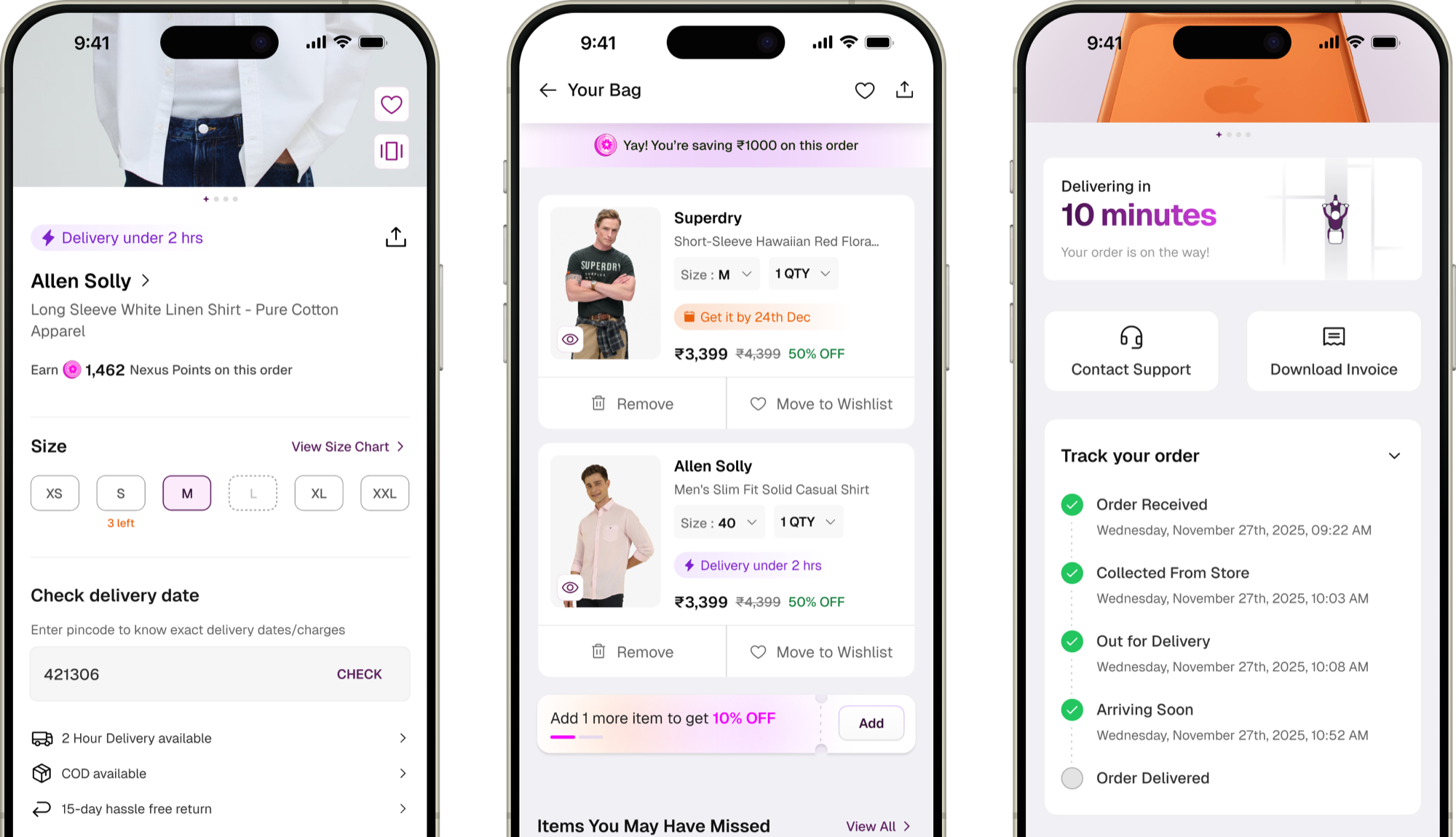
Trust at Every Stage
Delivery promise surfaced on PLP and PDP, not just at checkout. Loyalty points shown upfront throughout. Return options made visible before users added to cart.
Loyalty That Feels Like the Mall
The membership card was designed to feel like a real card: textured, purple, name and Nexus Cash balance up front. In a physical mall, your loyalty card is something you carry and show. We wanted that same sense of ownership in the app. Something that made users feel like members, not just shoppers.
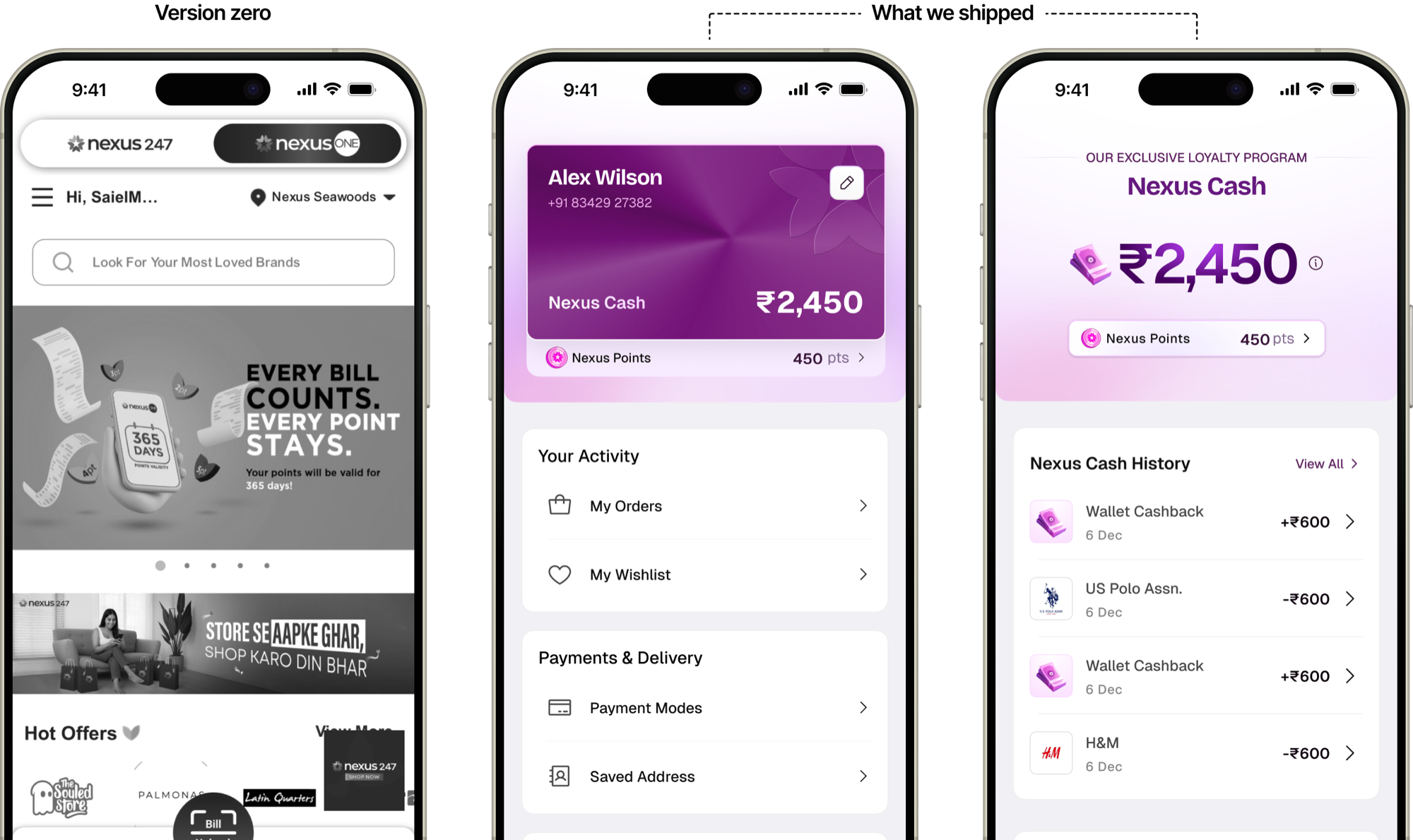
A mall-first information architecture.
Discovery anchored to a physical place, not an endless product feed. Users start by selecting a mall, browse within familiar brand environments, and experience products as part of real storefronts rather than isolated catalogue items.
Combined with visible delivery promises at every touchpoint, upfront loyalty incentives, friction-free guest browsing, and a post-purchase loop that rewards engagement, the app was designed to feel like a digital companion to a mall users already trust.
The product is live across Nexus Mall locations in India.
We designed the foundation for a product that needed to scale from day one. The IA, navigation system, and design decisions weren't built for one mall. They were built for many. What launched at Nexus Seawoods now runs across 16 malls across India.
The 99% COD cancellation rate was the benchmark we designed against. Every trust-building decision (visible delivery promises, in-mall returns, loyalty shown before checkout) was specifically targeted at giving users enough confidence to pay upfront.